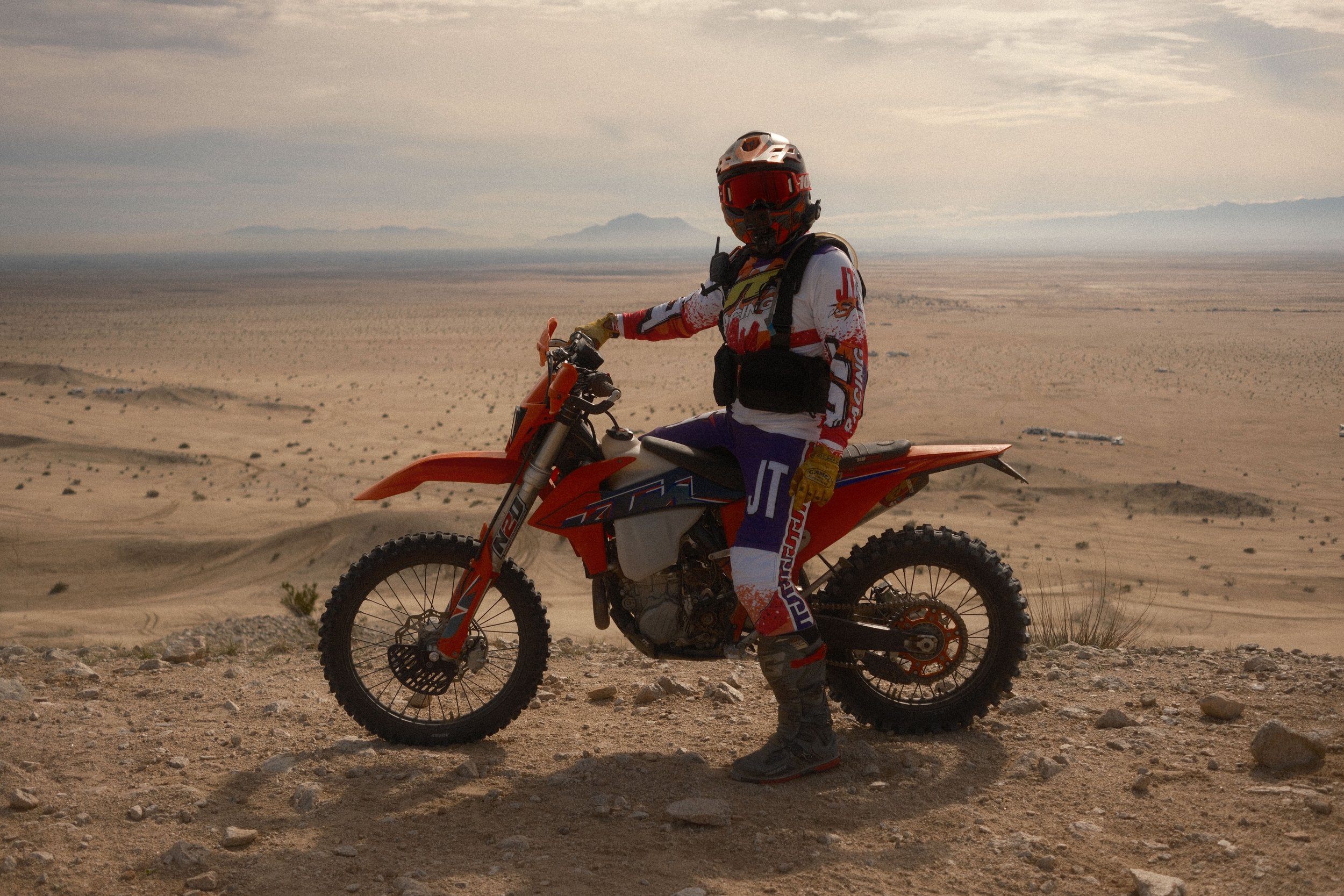
Baptized by Sand: Riding Superstition Mountain
One of the Department of Wander crew’s final outings of the year took us deep into the Southern California desert, to a place that doesn’t just test riders - it reshapes them. Superstition Mountain, tucked near the Mexican border between Ocotillo Wells and the edge of nowhere, is all about sand, speed, and learning to trust your throttle.
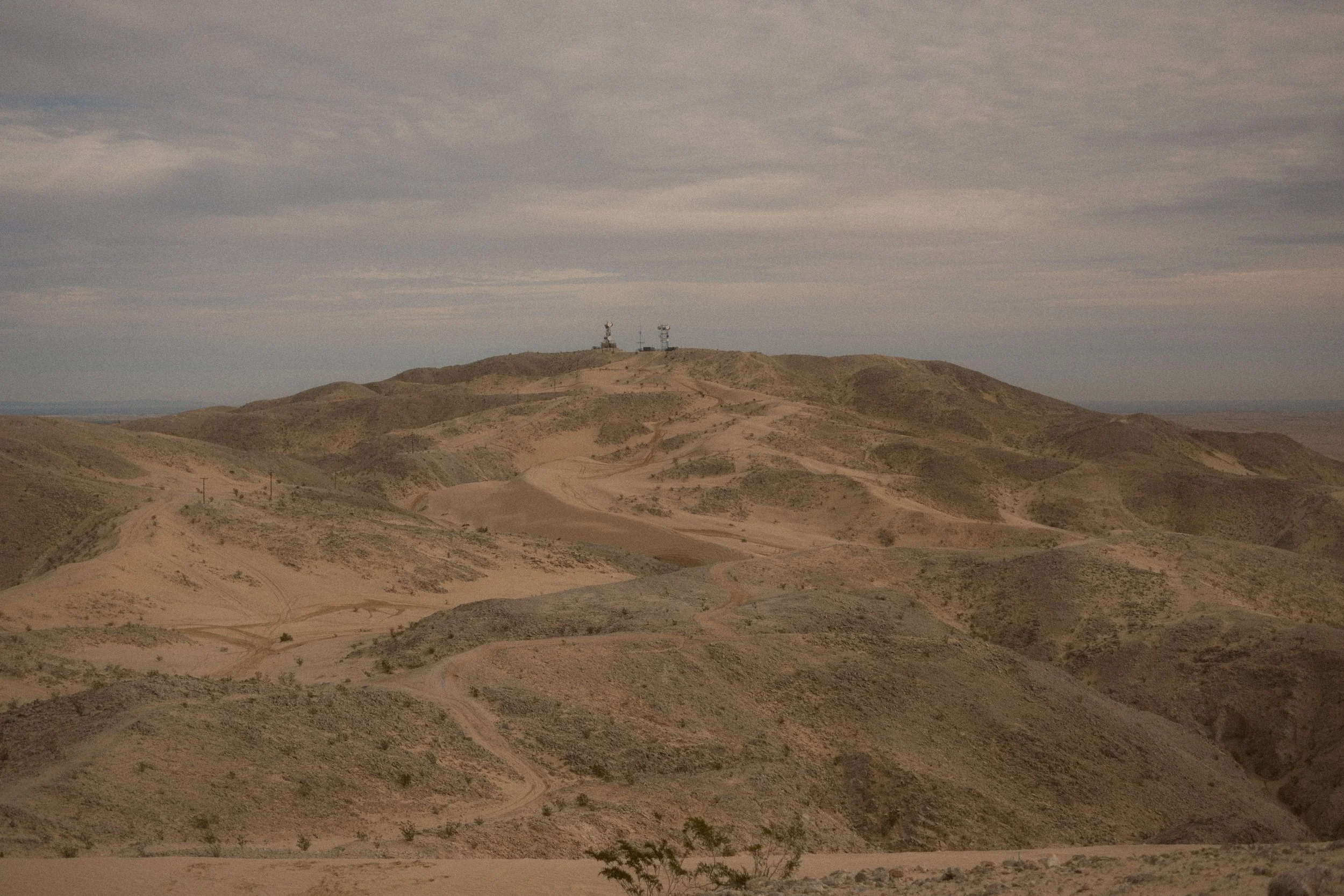
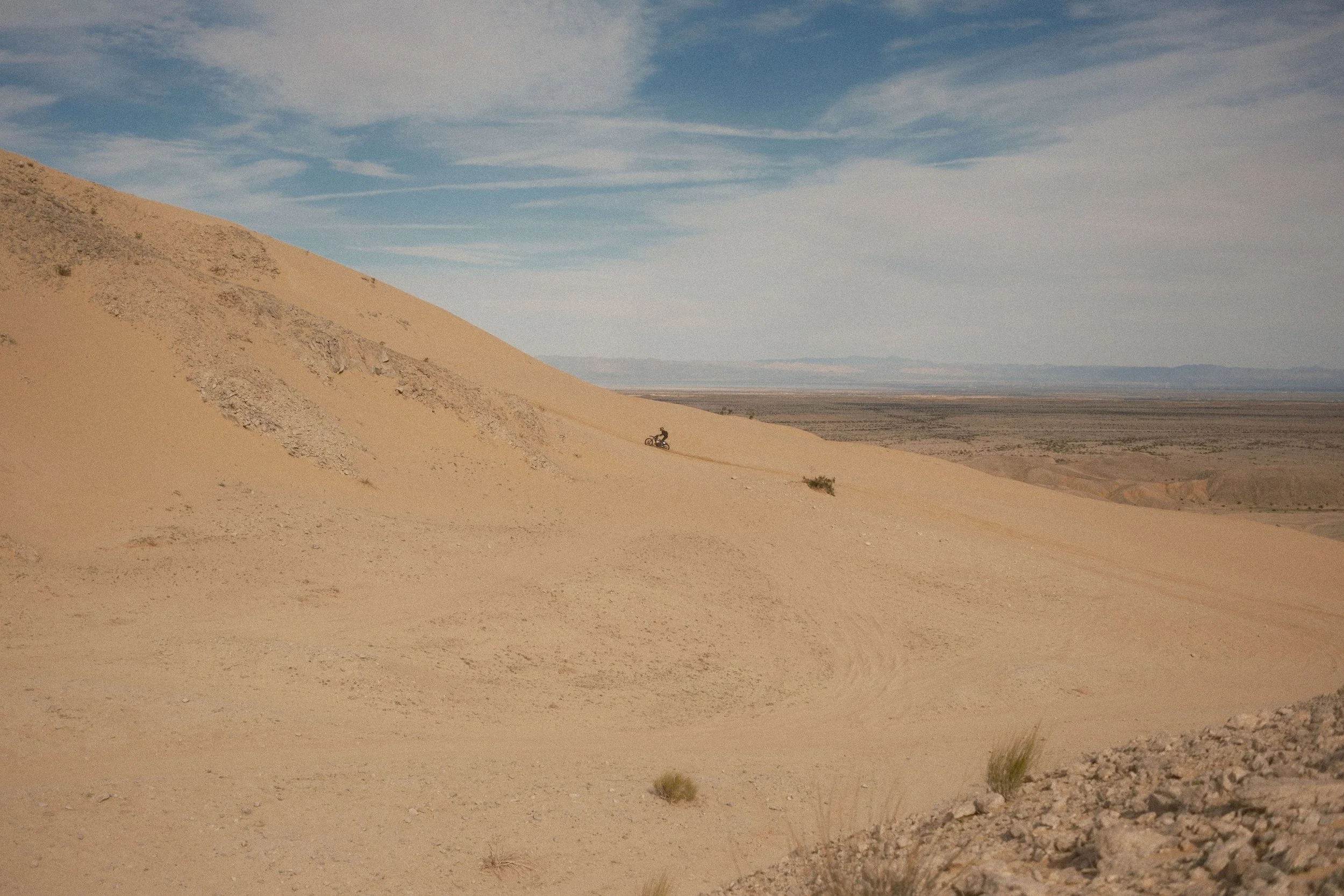
From a distance, the mountain rises abruptly from the desert floor, a distinct silhouette cutting into the horizon. Up close, it reveals a landscape of extremes - massive, flowing sand on the southern face and rugged, rock-strewn terrain to the north. It’s the kind of place where hesitation disappears quickly, replaced by commitment, momentum, and confidence as the desert teaches you how to ride it.
Sand, Speed, and Confidence
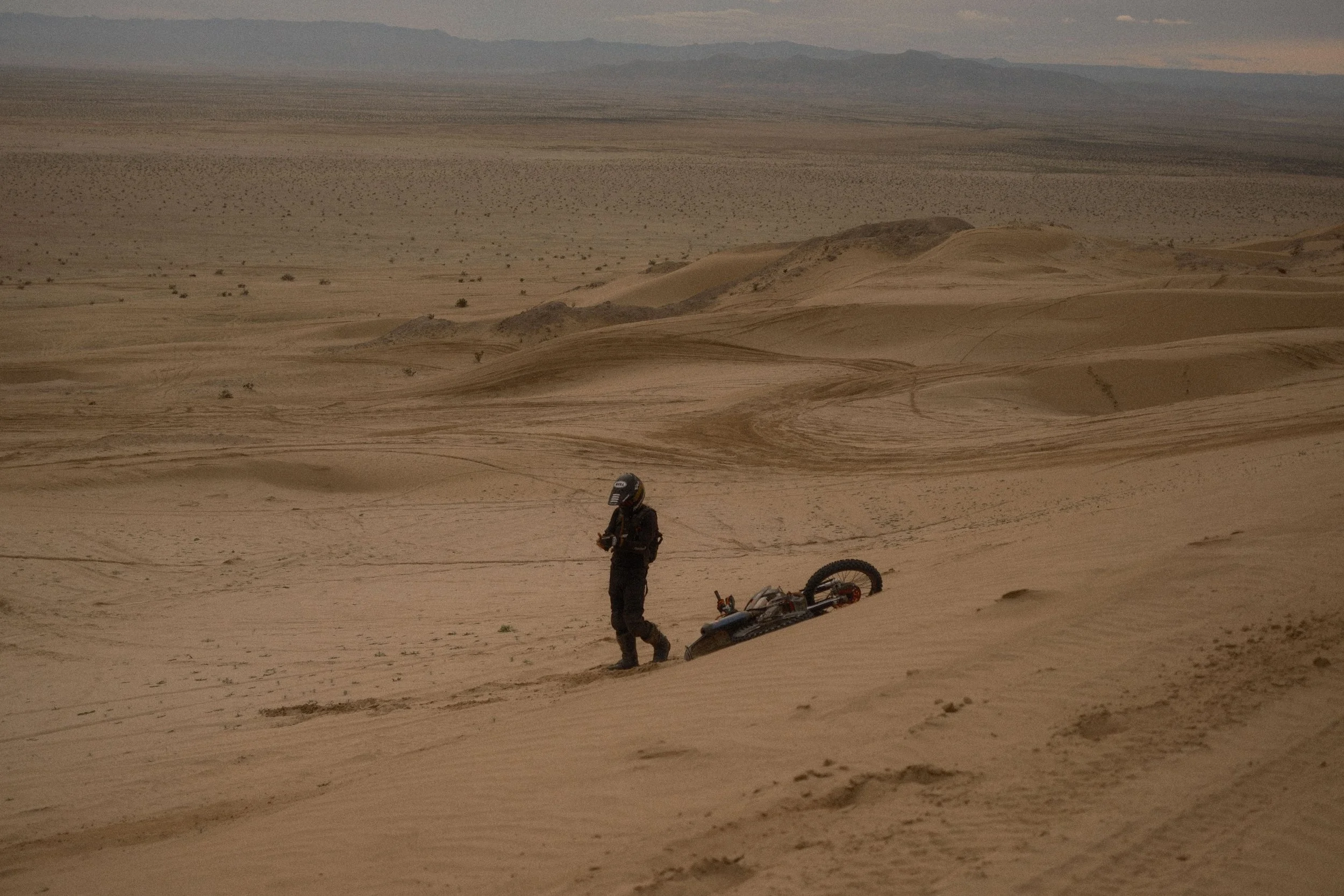
Superstition Mountain is legendary for its sand - deep, soft, and seemingly endless. If sand riding intimidates you, this is where fears get left behind. Spend a day here and you’ll come out the other side transformed, with better throttle control, balance, and confidence than you arrived with.
There’s nothing quite like the feeling of pinning the throttle and charging straight up steep sandy hills, the bike dancing beneath you as the desert blurs past. It’s equal parts chaos and control, adrenaline and focus - and when you crest the top, the reward is pure exhilaration.
For more advanced riders, countless off-shoots snake around the mountain, offering technical challenges and creative lines that beg to be explored. Each turn feels like an invitation to push a little further.
The Widow Maker
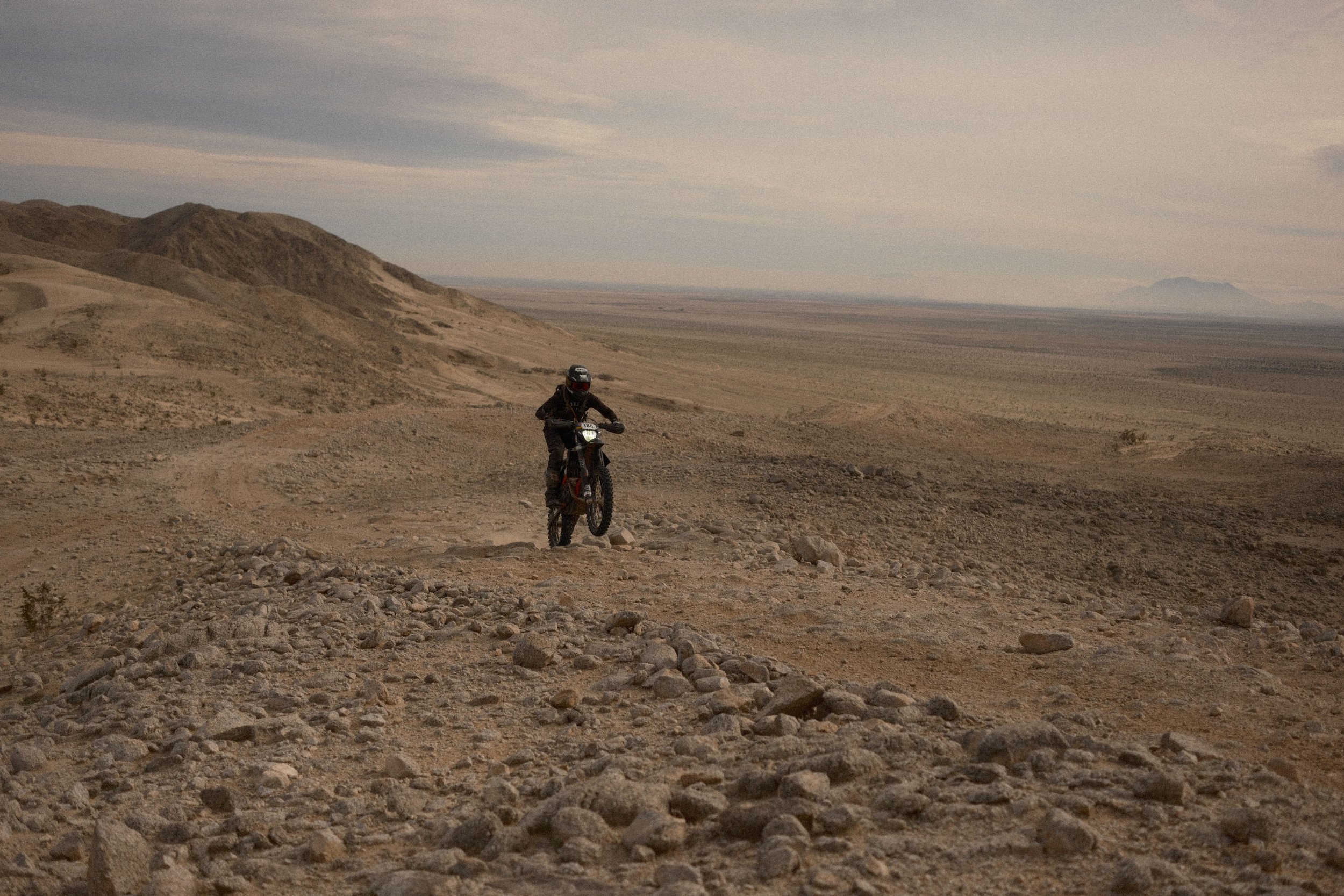
On the west side of the mountain lies a climb that commands respect: the Widow Maker. Steep, loose, and unapologetically intimidating, this hill climb has earned its name. It’s not for the faint of heart, but for those who dare to attempt it, the Widow Maker delivers a true test of skill, commitment, and nerve.
Staging at The Dip & Mud Hills
The ideal staging area for Superstition Mountain is The Dip, located to the east of the mountain. It’s a convenient place to park, unload, and prep for the day’s ride. Just nearby, you’ll find the Mud Hills - a fun and surprisingly scenic area with single track trails that weave along narrow ridgelines. These trails offer a different rhythm, trading wide-open sand for precision and flow, with sweeping desert views in every direction.
Leave No Trace
This is remote desert riding at its purest. There are no services, no stores, and no safety nets out here. Pack in, pack out - everything you bring with you should leave with you. Respect the land so these places remain wild and open for future riders to experience.
Superstition Mountain is more than just an OHV area. It’s a proving ground, a playground, and a reminder of why we ride - to explore, to challenge ourselves, and to feel small beneath vast desert skies. For the Department of Wander crew, it was the perfect way to close out the year.
Despite riding during the holidays — a time when most Southern California OHV areas are buzzing with activity — Superstition Mountain felt surprisingly empty. Wide-open desert stretched in every direction with only the sound of engines echoing off the hills. Long sandy climbs, ridgelines, and off-shoots were ours to explore without pressure, without crowds, and without the constant hum of traffic you often expect this time of year.
Maybe it was the weather that nudged people toward different plans. Or maybe it’s Superstition’s location - tucked between the hugely popular Ocotillo Wells and the massive dunes of Glamis - that keeps it flying under the radar. While those areas pull in crowds, Superstition remains quieter, more understated, and more intimate.
Whatever the reason, the lack of people made the experience even more special. More room to ride, more time to experiment in the sand, and more space to take in the desert. It felt like a rare moment where the landscape opened itself fully, reminding us that sometimes the best rides happen just off the beaten path.